 Bulgarian
 English


Approximate reading time: 6m 18s
e-Learning
e-Learning (EO or ORES), also called computer-based learning, is a form of training conducted with the help of electronic media. It includes web-based learning, virtual classrooms, and digital collaboration.
In the world of education, e-learning has established itself as a powerful tool that changes the way students learn and teachers teach. At the same time, choosing the right e-learning model can be a challenge. In this article, we will look at the different e-learning models and discuss how to choose the best one for your audience.
 Do you need e-learning? We will help with consultation and the experience we have gained in hundreds of projects. We have a catalog of ready-made courses. Call us at +359 878 685 304
Learner attention retention rate
The attention retention rate of learners is a major challenge in e-learning. It does not matter how well the instructor teaches if learners cannot remember what was said. Not because they are lazy or stupid - they simply cannot do it, psychologically and physiologically.
Studies by the American Research Institute, published in Forbes, show that e-learning enables attention retention from 25% to 60%, which is 3 to 6 times more than traditional learning with 8% to 10%. This difference comes from the ability to go through the material at individual pace, as well as for the learner to return and review the necessary material. This is also the reason online learning has become a key element in corporate training.
The main goal is for the content to be presented in a way that learners will like and that will hold their attention. The question is how do we achieve this? What do the target learners need, how do they learn, and what will appeal to them? What e-learning format is most suitable? What can be created within the set time and budget?
With this article, we aim to present the e-learning models and answer these questions.
Factors in choosing an e-learning model
There are five factors that should be taken into account when making a decision about the learning model:
1. The size of the team that will work on it;
2. The amount of information that needs to be presented;
3. The specificity of the topic and the best way to present it;
4. The understanding of the topic by future learners;
5. The goals that the training aims to achieve.
Main types of e-learning content
There are also three main types of e-learning content:
1.Support content: Provides the learner with information that is necessary for quickly completing a given task.
2. Learning experience: Intended for long-term building of knowledge and skills. Unlike support content, it transforms the learner's behavior.
3. Information: A combination of the previous two types. It aims to present information to learners that will increase their effectiveness in a certain context, for example product information for new employees.
Do you need e-learning? We will help with consultation and the experience we have gained in hundreds of projects. We have a catalog of ready-made courses.. Call us at +359 878 685 304
e-Learning models
Synchronous and asynchronous learning
Synchronous learning
Synchronous learning involves real-time interaction between the instructor and the students. It can be carried out through webinars, virtual classrooms, and video conferences. The main advantages of synchronous learning include:
- Immediate feedback
- Opportunity for discussions and group activities
- A stronger sense of community
Asynchronous learning
Asynchronous learning allows students to learn at a time and pace convenient for them. Materials can include video lessons, text documents, and interactive exercises. The main advantages of asynchronous learning are:
- Flexibility and accessibility
- Opportunity for self-paced learning
- Opportunity for in-depth reflection and repetition of the material
Blended learning
Blended learning combines elements of synchronous and asynchronous learning. It is a popular model that brings together the best of both worlds, giving students the opportunity for real-time interaction as well as the flexibility of self-paced learning. Examples of blended learning include:
- Part of the course being delivered online, while the rest is in a traditional classroom
- Online discussions and forums that supplement traditional lessons
Project-Based Learning
This learning model encourages students to acquire knowledge and skills through working on real projects. Students engage in practical tasks that have real-world application, thereby developing critical thinking, creativity, and problem-solving skills. The main characteristics of project-based learning include:
- Focus on students and their active role in the learning process
- Integration of different disciplines and topics
- Development of practical and professional skills
Adaptive Learning
Adaptive learning uses technologies that adapt to the individual needs and abilities of each student. Through data analysis and the use of algorithms, adaptive systems can provide personalized materials and tasks that match the learner's current level of knowledge and progress. The main advantages of adaptive learning are:
- Individualized learning and personalized recommendations
- Increased motivation and learner engagement
- Optimizing the learning process to achieve better results
Computer-based or web-based learning
Computer-based or web-based learning is delivered through a personal computer or mobile device. Training courses can be network-based or local, synchronous or asynchronous. They are most often delivered through software such as an LMS system - a learning management system.
Studies show that e-learning can reduce training time by 40% to 60% compared to traditional learning. This means your employees can spend less time training, improve their performance faster, and increase your company's results.
For learners, the biggest advantages of online learning are the ability to learn at their own pace (95%) and the lack of need to travel (84%). Electronic methods such as remote learning through mobile devices fully meet these needs of learners.
Gamification / Game-Based Learning / Serious Games
Gamification is one of the main characteristics of educational-entertainment programs. It presents learners with incentives for progress in the form of badges, results, and achievement certificates. In addition to engaging learners, the benefits for companies are much greater. The rich functionality of custom-made games offers complex systems with rewards, achievements, and point accumulation through the completion of assigned tasks.
Game-based learning can be defined as productive video games whose purpose is to improve learners' skills, motivate them, and place them in situations they are likely to encounter in real life.
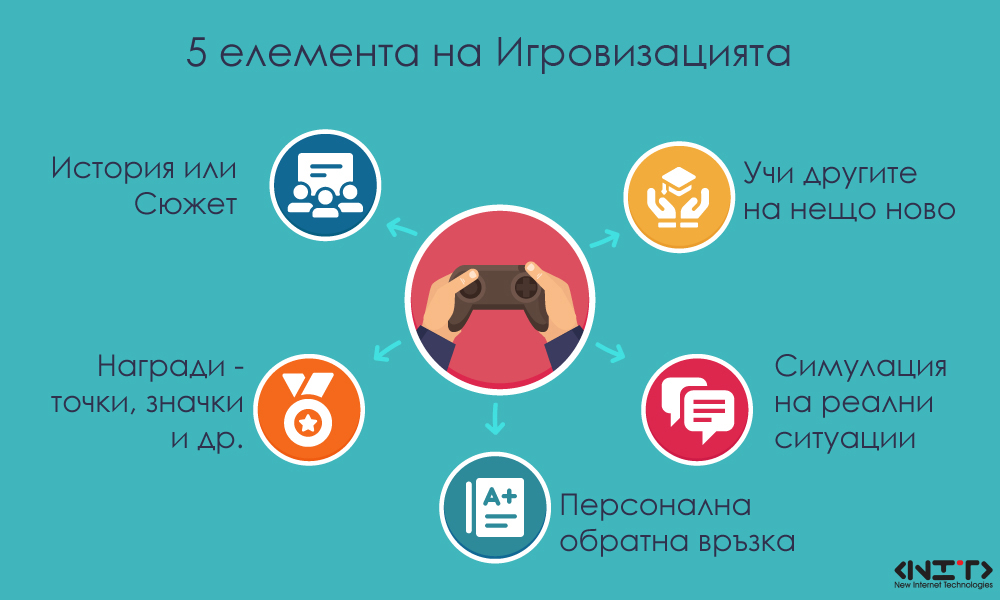
There are differences in the implementation and goals of gamification, but most include the following elements:
- Story or plot
- Rewards - points, rankings, badges, etc.
- Timely personal feedback
- Simulation of real situations
- The goal, as with any game, is to teach learners something
The popularity of games in training is due to increased motivation and learner engagement, and the opportunity to practice without risk. Gamification is most suitable and most often used for soft skills training, conflict resolution, security management, as well as complex production processes.
Do you need e-learning? We will help with consultation and the experience we have gained in hundreds of projects. We have a catalog of ready-made courses. Call us at +359 878 685 304
Micro content
Micro content (microlearning) consists of checklists, short tests, infographics, flash cards, diagrams, short videos, or slideshows that present only one concept. The content is delivered in small chunks, making information easy to review and helping retention.
Research shows the following advantages of micro content:
- Increases training and content delivery effectiveness by at least 17%
- More preferred than one-day training sessions
- Shorter courses are more accessible and less demanding
- 3-7 minute chunks of information match the optimal attention retention and working memory of the average learner
- The modular content of microlearning is easier to create and update
Mobile content
Mobile learning is consumed by learners in 'small bites' and is available on their mobile devices at any time. Access to content and learning applications supports the learner's focus of attention as well as their understanding of the topic. It also prevents cognitive overload because learners take in only as much as they can at one time.
With the help of a suitable LMS system, managing mobile content and learning is easy. Company videos, texts, exercises, e-books, and other materials can be created and uploaded to be available at any time. In this way, training effectiveness can be improved.
Simulations and simulation games
Business simulation games are tools in e-learning that present structured and real-life-based content. They are suitable for practicing marketing, accounting management, specific operations, and more. These online games, which allow business management simulation, help employees make decisions because they can see the results and their impact on the final outcome.
Virtual reality / Mixed reality
This e-learning model is a new way of presenting valuable knowledge based on real experience. From chemistry labs that do not need consumables to virtual training of oil platform teams from shore. Virtual reality tools provide the opportunity to practice knowledge and skills in a low-risk environment, reproducing real situations and scenarios.
It is suitable for safely training vital skills for people who risk their lives at work. Other fields where it is applicable range from healthcare and manufacturing to education and real estate.
In business, virtual reality applications include:
- Product demonstrations
- Staff training
- “Try before you buy” services
- Increasing brand interaction
- Explaining more complex concepts
Webinars
Webinars are extremely popular during and after the epidemic. They are a great way to present information online that can reach an almost unlimited number of participants.
Usually live or pre-recorded, webinars give listeners the opportunity to ask questions in real time or to be watched at a time convenient for the learner. They imply collaborative learning and deeper understanding of the topic, as well as timely answers.
Conclusion
The choice of the right e-learning model depends on many factors, including the goals of the training, the needs of the students, and the available resources. Synchronous and asynchronous learning, blended learning, project-based learning, and adaptive learning are just some of the possible approaches. Combining different models and personalizing the learning process can lead to the creation of effective and engaging e-learning programs.
Regardless of the chosen model, the key to successful e-learning is to focus on the needs of the students and use the best practices and technologies to achieve the desired learning goals.
There are many e-learning methods suitable for different purposes. Most can be combined in a content management system, which we offer - LMS systems.
Do you need e-learning? We will help with consultation and the experience we have gained in hundreds of projects. We have a catalog of ready-made courses. Call us at +359 878 685 304
Check out the free resource "Trends in e-learning in 2022."
Write to us, we have extensive experience in creating e-learning for all kinds of clients:


